
Illegal logging in the Budongo Forest and the Impact on Bird Distribution
Authored by the Perspectives Collective: Rume David, Baraka Julius, Chandia Chrispus, Oryem Elisa
Introduction
Targeted trees for illegal logging include mainly Cordia millenii and two species of mahogany, Khaya anthotheca and Khaya grandifolia (also referred to as Munyama in the local language). Other trees targeted include Alstonia boonei, Cynometra alexandri, Milicia excelsa, and trees from the Rinorea family. All these species are very strong, but Khaya is the strongest. It is also the most commonly logged tree, and its numbers have significantly reduced in the last decades. Trees are logged for different reasons. For instance, Cordia millenii is used to make boats, Khaya and Milicia species are used to make furniture, Alstonia to make coffins, Cynometra for charcoal, and Rinorea to make hoe handles.
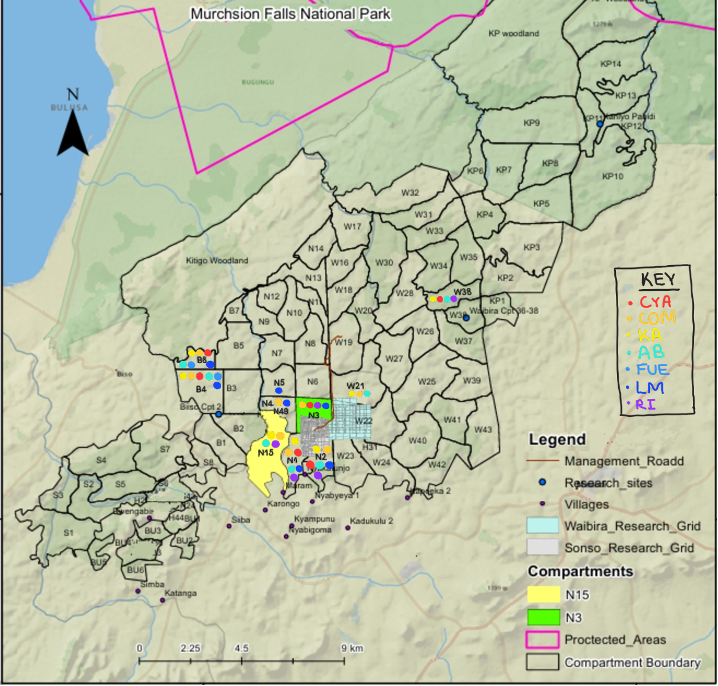
Logging depends on the region and local needs. Cordia is taken more often in areas closer to the lake, while people in town (and around BCFS) focus on logging Khaya (see map in Figure 1).
The way they cut wood is by creating a platform and digging a hole. The holes are 5 meters long and 3 feet deep. A strong structure is then built on top of the hole, using Addis flora to make poles. The tree is then pushed onto the structure and cut part by part by two people using a saw. One person is down in the hole, and the other one up. Logged timber is usually transported out of the forest at night to avoid being caught.
Figure 1. Map of Budongo Forest, split into its compartments.
Why does illegal logging take place?
Illegal logging occurs as a way to make money. Typically, people who log wood do it for the purpose of making furniture, boats, or instruments (see Video 1 for video), and can make a lot of money from this.
Most people dealing with Khaya don’t sell them around where they are located - most of those dealers have stores where they keep the timber, and they then sell in Kampala - for up to 250,000 UGX (about 50 USD). This transport results in a big loss though, because you need to pay for the transport to Kampala, so more wood is cut down to offset these expenses. Some loggers also choose to sell wood more locally, for instance, Alstonia is sold to local coffin makers.
Video 1. Example of tree species used for making xylophones, which are Cordia millenii, Markhamia platycalyx, and Funtimia elastica.
Which trees are mostly cut down?
Two types of trees are primarily cut down in the forest, Cordia millenii and Mahogany:
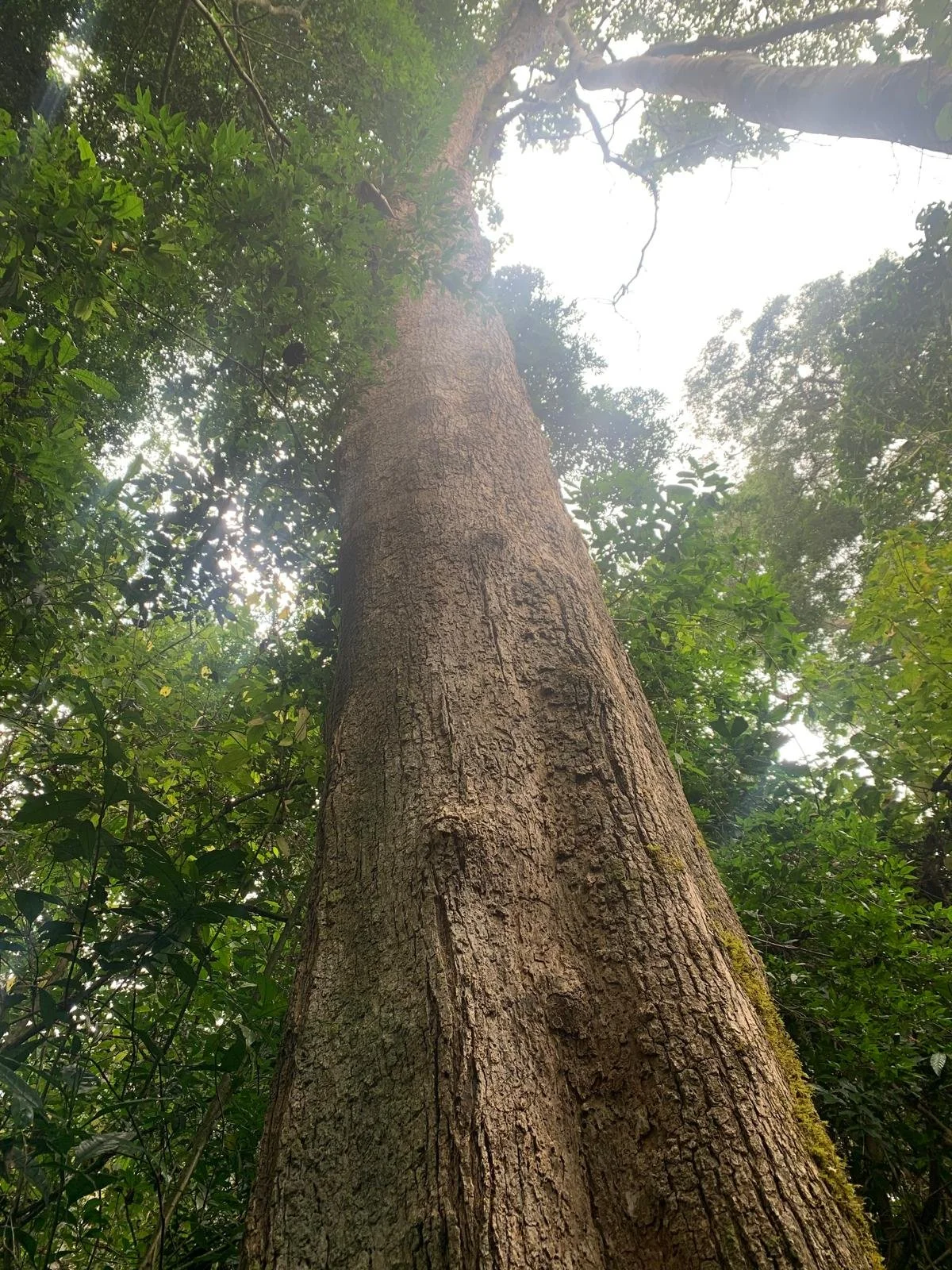
Cordia millenii: this tree bears fruits that are green when unripe and yellow when ripe and are as big as prunes. These fruits are often eaten by primates like chimpanzees and colobus monkeys. Birds feed on the fluid inside the seeds, particularly hornbills. Chimpanzees also feed on the buds of the tree. As well, bees come and pick the nectar of the flowers of this tree species. As such, they are a central part of the forest’s ecosystem.
Why is cordia cut down?
It is often cut down to build boats, as it is naturally waterproof. It is also used to make furniture. For this reason, it is often taken from regions of the forest closer to the lake, though many were logged from the Waibira region as well.
The fact that it is waterproof also makes it lighter, and easier to carry out of the forest after logging.
Cordia timber is also used to make bee hives. This is because this timber does not produce any smell. Bees are selective for hives, and smell can bother them. So people who keep bees will choose Cordia over other timber for their bee hives.
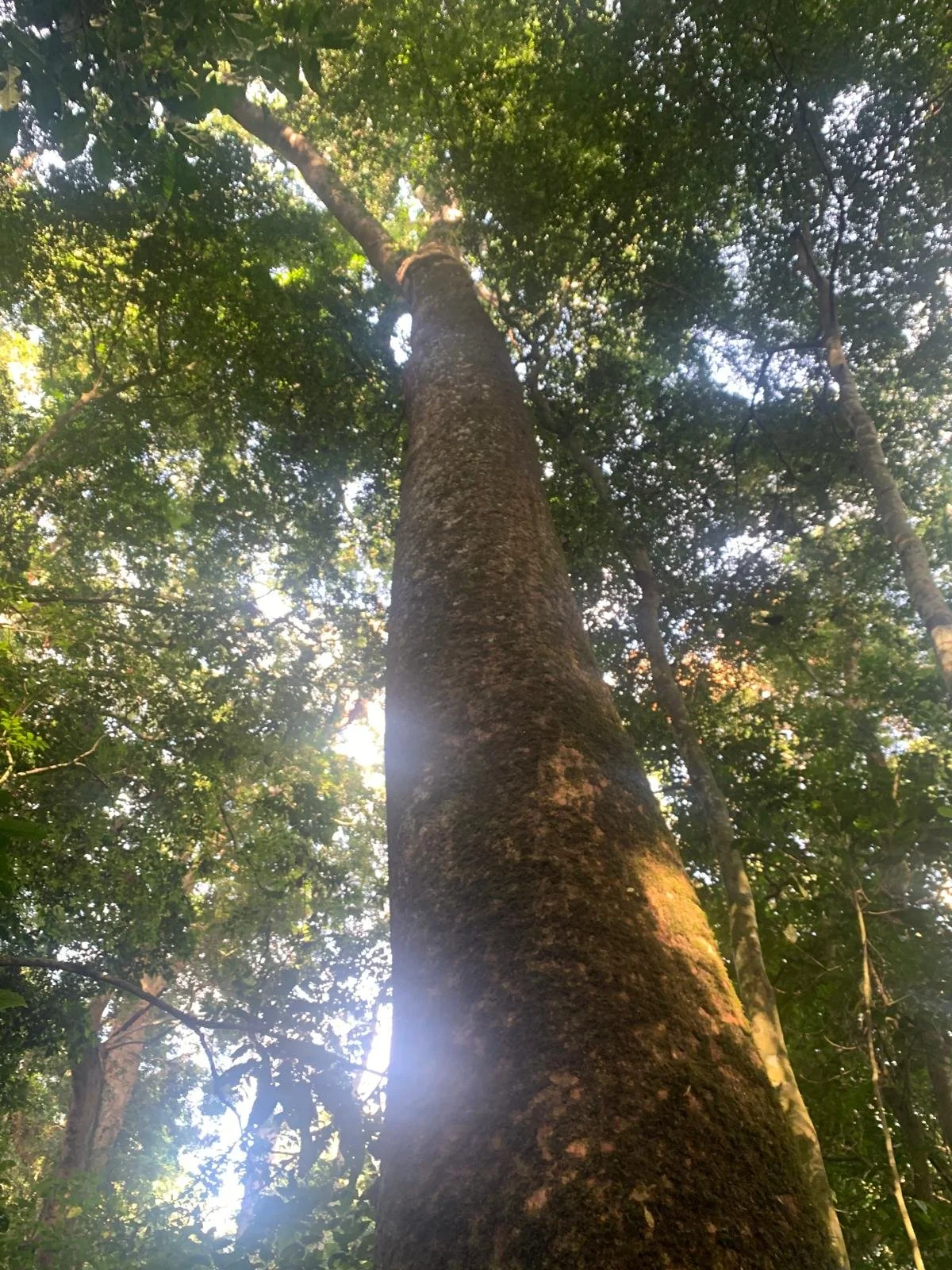
Mahogany: this includes primarily Khaya anthotheca and Khaya grandifolia. These trees look very similar, including similar color and behavior - to tell them apart K. grandifiolia has five pods when it opens for the fruits, while K. anthotheca has four pods. Their flowers are very similar to mango tree flowers. Like Cordia, species rely on these trees for nutrition. Primates tend to pick on the young leaves and seeds of this tree. Birds will feed on the liquid nectar from the trees, while bees feed on the flower nectar. Khaya species emit smells that attract insects like bees.
Why is mahogany cut down?
The two Khaya species are most often logged to make hard, strong furniture - though the furniture these trees produce is very expensive, and the timber is very heavy and can be difficult to transport.
Mahogany trees are also used to make doors.
There has been a significant decrease in these species, and their survival in Budongo depends largely on the work that is happening at the Budongo Conservation Field Station (BCFS).
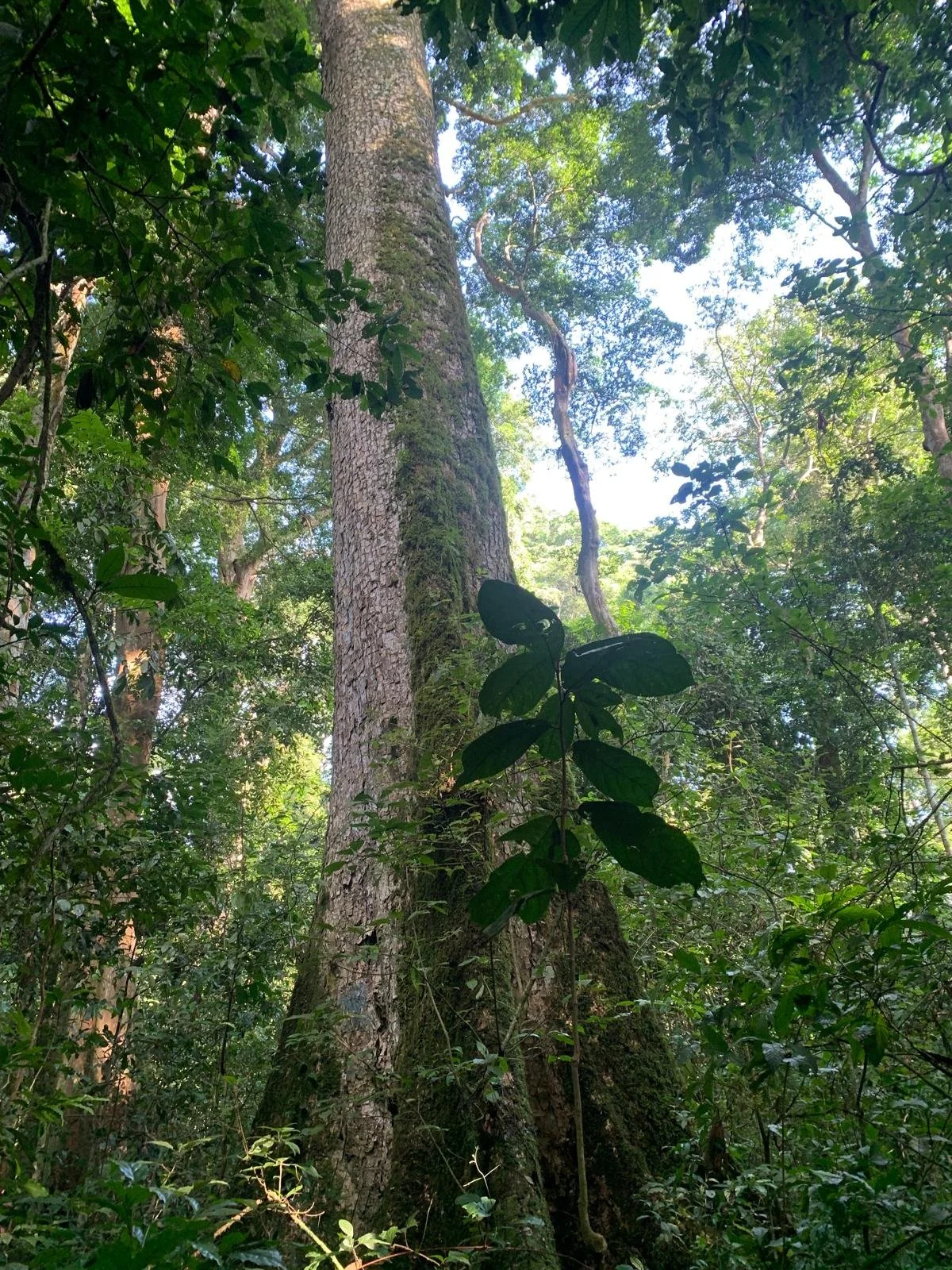
Figure 3. From left to right, examples of Cordia milleni, Khaya anthotheca and Entandrophragama utile
How does logging impact the forest and animal distribution?
Logging can have serious consequences, including the killing of microorganisms, and the displacement of birds and other wildlife. Cutting down these trees can also impact other trees, either by directly destroying them when falling down, or by accidentally cutting the mother tree and inhibiting the spreading of seeds necessary for more trees to grow.
Logging often causes the displacement of certain bird species, particularly more shy ones that are sensitive to changes in the environment, such as the Black-eared ground thrush (Geokichla camaronensis), Rufous-sided broadbill (Smithornis rufolateralis), Green-breasted pitta (Pitta reichenowi), and Jameson’s antpecker (Parmoptila jamesoni). Many of these species are endangered, and can be driven out of the forest over time. In fact, there are instances where birds have been seen to be completely pushed out of Budongo forest because of logging. For instance, Jameson’s antpeckers used to be found in Waibira and Sonso, but due to constant human activities such as logging, they have been forced to move to the other areas of the forest. Some areas of the forest, such as N15 (see Figure 1), on the other hand, tend to host some of the more rare species of birds, as less logging occurs there. Finally, birds that rely on the fruits and seedlings of these trees for feeding will be impacted by logging.
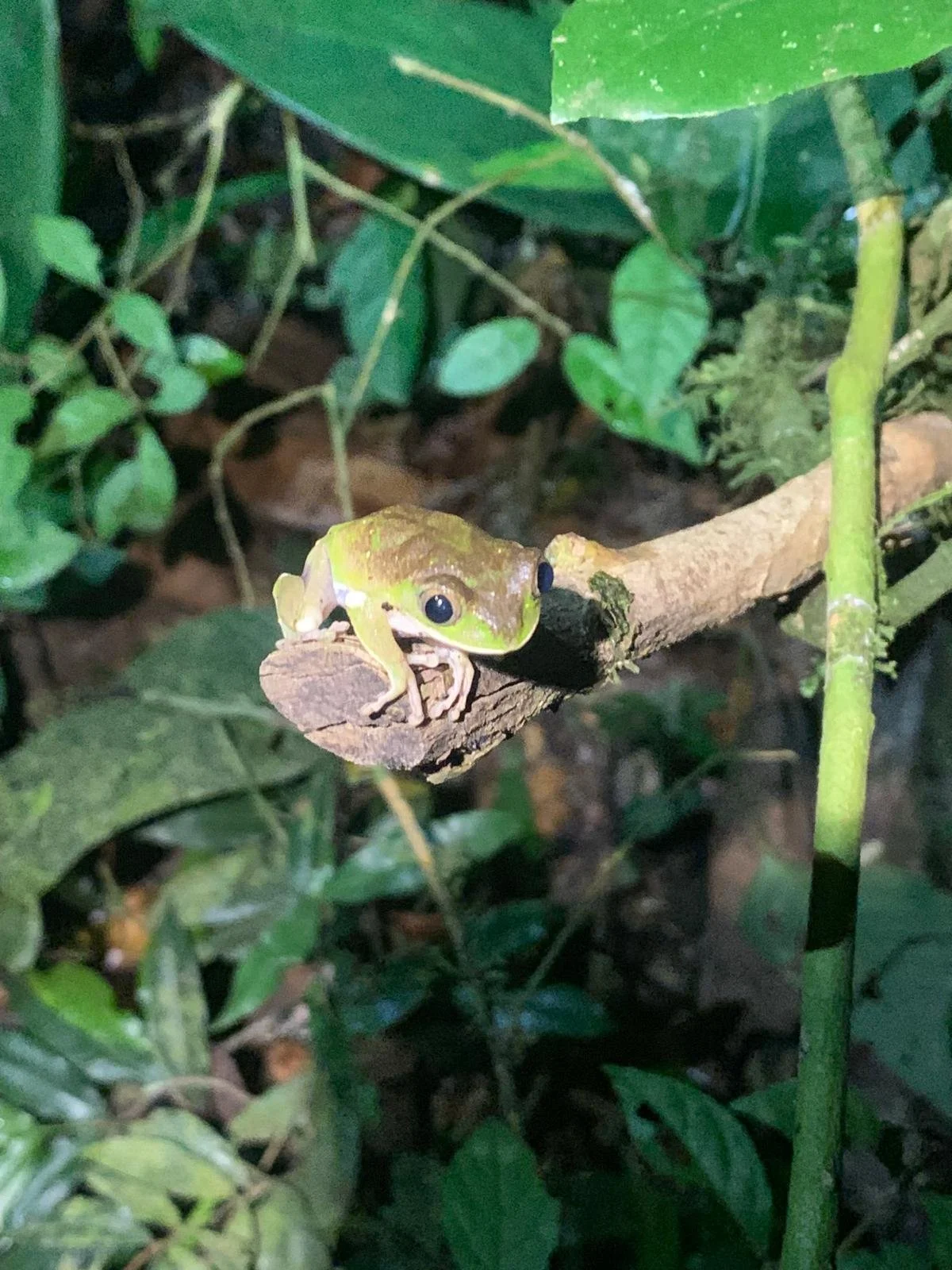
Logging has also been found to impact the migration of certain amphibian species such as tree climbing frogs, particularly Leptopelis christyi. The cutting down of trees such as Cynometra alexandrii can result in the killing of these frogs, which live under the leaf litter. Cutting down trees more generally can also destroy the eggs laid by the frogs. Logging can also create the displacement of frogs, which then cannot communicate with one another to mate. This ultimately impacts the reproduction of the species. Finally, the burning of wood in the forest, a current practice in Budongo forest, can also result in the destruction of frog eggs laid in the burnt trees, destroying the life cycle of frogs.
Figure 4. Image of a tree climbing frog in Budongo Forest
Conclusion
Constant logging will in the future lead to the endangerment of the tree species. The next generations may never see these tree species and this will impact the wildlife, primates, birds. This will cause their migration and impact their research in the future. Illegal activities will lead to the reduction of individual species which will results in the locomotion of primates and birds, which will be hard to get them in the forest. The forest also helps in the formation of rainfall. Once logging takes place it will affect rainfall, and also have an impact on climate change. This, in turn, will reduce the availability of food and increase conflict between wildlife and humans. All of these factors will impact all of us in our jobs, as birders, herpetologists and phenologists.
CITE AS:
Rume, D., Baraka, J., Chandia, C., & Oryem, E. (2026). Illegal logging in the Budongo Forest, and its impact on bird distribution. In Perspectives Collective Journal (Vol. 5, Issue 1). Zenodo. https://doi.org/10.5281/zenodo.23789635